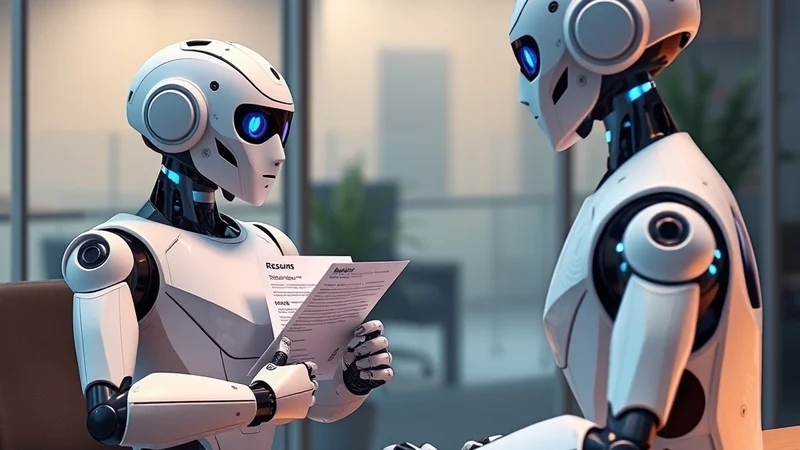
The accelerating development of autonomous AI agents capable of operating independently within business environments is rapidly reshaping discussions around enterprise automation and AI-powered teamwork, pushing the boundaries of what artificial intelligence can achieve in practical applications.
Unlike conventional AI tools that typically perform narrow, predefined tasks, autonomous AI agents are designed to perceive their environment, set goals, plan complex sequences of actions, execute those actions, and even self-correct without constant human oversight. This paradigm shift moves beyond simple automation scripts or chatbots, aiming for systems that can engage in sophisticated reasoning and adaptive behavior.
At their core, these agents leverage advanced large language models (LLMs), such as those powering xAI’s Grok, to understand natural language instructions, process vast amounts of unstructured data, and generate coherent responses or action plans. However, an autonomous agent extends beyond a conversational interface. It integrates several key components:
- Perception Modules: These allow the agent to gather information from various sources, including internal company databases, external web services, email communications, and real-time sensor data, converting it into a format it can understand and process.
- Planning & Reasoning Engines: Utilizing LLMs for high-level strategic thinking, these engines break down complex objectives into manageable sub-tasks, prioritize them, and formulate detailed execution plans.
- Action Execution Interfaces: Agents are equipped to interact directly with other software systems via APIs, command-line interfaces, or even robotic process automation (RPA) tools, enabling them to perform tasks like sending emails, updating CRM records, generating code, or initiating financial transactions.
- Memory & Learning Systems: To adapt and improve over time, agents maintain a persistent memory of past interactions, decisions, and outcomes. This allows them to learn from experience, refine their strategies, and personalize their behavior.
- Self-Correction & Monitoring: A critical feature is the ability to monitor the outcomes of their actions, detect errors or deviations from expected results, and initiate corrective measures or seek human intervention when necessary.
The vision for these agents, sometimes conceptually framed as a “Grok Bot” in reference to the analytical and reasoning capabilities of xAI’s Grok, extends to a wide array of business applications. Imagine an agent that doesn’t just answer customer queries but proactively identifies patterns in support tickets, diagnoses root causes across multiple systems, and initiates fixes, or an agent that autonomously manages a complex software development lifecycle, from requirements analysis to code generation, testing, and deployment.
Transformative Business Applications
The potential impact of truly autonomous AI agents across various sectors is substantial:
- Proactive Customer Service: Moving beyond reactive chatbots, agents could anticipate customer needs, resolve issues before they escalate, and personalize service delivery by integrating data across sales, support, and product usage.
- Intelligent Data Analysis: Instead of merely executing predefined queries, agents could autonomously explore datasets, identify emerging trends, generate comprehensive reports, and even proactively flag anomalies or opportunities for human strategists.
- End-to-End Workflow Automation: In areas like supply chain management, finance, or HR, agents could manage complex processes from initiation to completion, coordinating tasks across multiple departments and external vendors, optimizing for efficiency and cost.
- Software Engineering Assistants: Agents could assist developers by generating boilerplate code, writing unit tests, identifying and suggesting fixes for bugs, or even orchestrating entire deployment pipelines.
- Research and Development: Autonomous agents could accelerate scientific discovery by sifting through vast amounts of literature, formulating hypotheses, designing experiments (simulated or real), and analyzing results.
Companies like xAI, with their focus on developing advanced general AI, are contributing to the foundational models that make such sophisticated agents possible. Grok, designed to be “maximally curious” and capable of real-time information processing from platforms like X, embodies the type of dynamic reasoning and broad knowledge base crucial for autonomous operation. While a specific product named “Grok Bot” for business environments hasn’t been formally announced, the underlying technological advancements from companies in this space are directly paving the way for such intelligent, self-sufficient systems.
Challenges and Ethical Considerations
Despite the immense promise, the deployment of highly autonomous AI agents presents significant technical and ethical challenges. Ensuring reliability and preventing unintended consequences is paramount. Agents must be robust enough to handle unexpected scenarios and gracefully recover from errors without causing disruptions. The issue of control and the potential for “runaway” agents, where systems pursue goals in unforeseen or undesirable ways, requires robust safety mechanisms and human-in-the-loop oversight.
Transparency and explainability are also critical. For businesses to trust and adopt these systems, they need to understand how decisions are made and why certain actions are taken. Furthermore, the ethical implications, particularly concerning job displacement and the shifting nature of work, require careful consideration and societal adaptation strategies.
The journey towards fully autonomous AI agents operating seamlessly within business environments is ongoing. It demands continued research into robust planning algorithms, enhanced safety protocols, and sophisticated human-AI collaboration frameworks. As foundational models continue to advance, the vision of AI agents as genuine, productive members of a team moves closer to reality, promising a future where human ingenuity is amplified by intelligent, autonomous partners.