The integration of advanced large language models, exemplified by Anthropic’s Claude, into real-time communication platforms is rapidly transforming how professionals interact in virtual meetings, promising to offload menial tasks from participants and enhance productivity. While direct, first-party “Claude in video calls” products are still evolving, the underlying capabilities of models like Claude 3 Opus, Sonnet, and Haiku are increasingly being leveraged through API integrations and third-party tools to provide sophisticated real-time assistance, from dynamic note-taking to drafting actionable plans during live discussions.
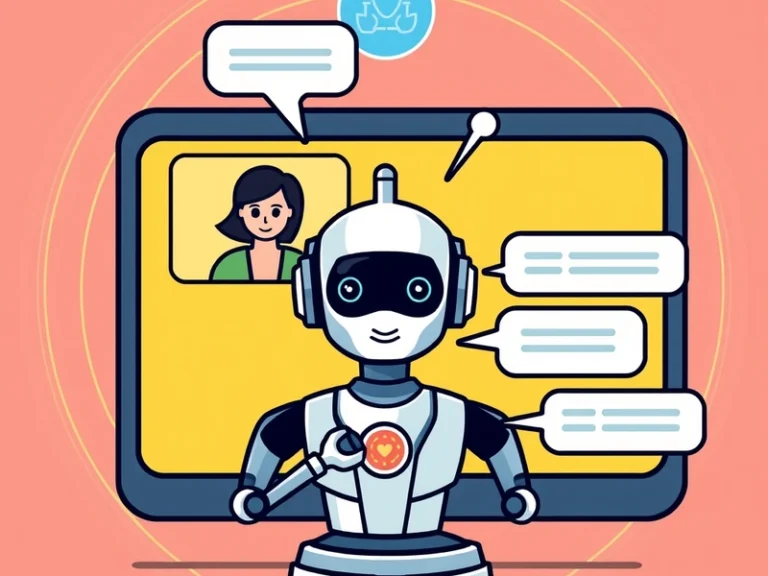
The core proposition is compelling: imagine an AI assistant attending your video calls alongside human participants, not just as a passive transcriber, but as an active, intelligent agent. This assistant would process spoken language in real-time, identify key discussion points, extract action items, summarize decisions, and even draft follow-up communications or project plans based on the conversation’s flow. This moves beyond simple transcription to a deeper level of cognitive assistance, allowing human attendees to focus entirely on the discussion and strategic input.
The Technical Foundation: Why Claude is Well-Suited
Large language models like Claude possess several characteristics that make them exceptionally well-suited for this real-time meeting assistance:
- Extensive Context Windows: Claude 3 models, particularly Opus and Sonnet, boast significantly larger context windows compared to many predecessors and competitors, with Claude 3 Opus supporting up to 200K tokens. This allows the AI to retain a comprehensive understanding of lengthy conversations, tracking intricate details, shifts in topic, and emergent themes throughout an entire meeting, rather than losing context after a few minutes.
- Advanced Reasoning and Summarization: Beyond simply transcribing, Claude’s sophisticated reasoning capabilities enable it to discern the essence of discussions, identify core arguments, extract actionable tasks, and synthesize complex information into concise summaries. It can differentiate between casual remarks and critical decisions, a nuance often missed by simpler AI tools.
- Multimodal Potential: While primarily text-based in this context, the broader multimodal capabilities emerging in LLMs hint at future integrations where visual cues (e.g., screen sharing content, whiteboard diagrams) could also inform the AI’s understanding, though this is less prevalent in current real-time meeting assistants.
- Safety and Alignment: Anthropic’s focus on Constitutional AI and robust safety guardrails is particularly relevant for enterprise use cases. When an AI is privy to sensitive company discussions, assurances regarding data privacy, bias mitigation, and responsible output generation are paramount.
Real-Time Challenges and Solutions
Implementing an AI assistant that actively participates in real-time video calls presents several technical hurdles:
- Accurate Speech-to-Text (STT): The foundation of any real-time audio processing is highly accurate STT. Modern AI models, often separate from the LLM itself but integrated into the pipeline, have made significant strides, handling multiple speakers, accents, and noisy environments with increasing proficiency.
- Low Latency Processing: For an AI to feel like a seamless participant, its processing must occur with minimal delay. This requires efficient model inference and optimized data pipelines to quickly transcribe, analyze, and generate output without disrupting the meeting flow.
- Integration with Conferencing Platforms: APIs and SDKs from platforms like Zoom, Microsoft Teams, and Google Meet are crucial for allowing AI assistants to join calls as virtual participants, access audio streams, and potentially interact through chat or other UI elements.
- Speaker Diarization: Correctly identifying who said what is essential for accurate note-taking and attribution. Advanced diarization techniques, often leveraging voice biometrics and context, are key to this.
Companies like Zoom, with its AI Companion, and Microsoft, with Copilot for Teams, are integrating similar LLM-powered functionalities directly into their platforms. Third-party solutions such as Otter.ai and Fathom.ai also provide sophisticated meeting summaries and action item extraction, often leveraging a combination of proprietary AI and foundational models via API. Models like Claude provide the powerful reasoning engine that can elevate these services beyond basic transcription and summarization to truly intelligent assistance.
Practical Applications in the Virtual Meeting Room
The potential applications of an AI like Claude acting as a virtual assistant are extensive:
- Automated Note-Taking: Generating structured notes, complete with speaker attribution, timestamps, and key highlights, freeing human participants from the burden of detailed scribing.
- Action Item Extraction: Automatically identifying tasks, assigning them to specific individuals mentioned in the conversation, and noting deadlines.
- Decision Tracking: Pinpointing and summarizing critical decisions made during the meeting, including dissenting opinions or conditions.
- Real-time Clarification and Context: Potentially, an AI could be queried during a meeting to recall a previous point, summarize what has been discussed so far, or even fetch relevant information from linked documents.
- Drafting Follow-up Communications: Generating initial drafts of meeting minutes, summary emails, or even project updates based on the discussion, ready for human review and refinement.
- Meeting Analysis and Insights: Post-meeting, the AI could provide analytics on speaker participation, sentiment analysis, or identify recurring themes across multiple meetings.
The strategic value lies in reclaiming human attention. By offloading the cognitive load of documenting and recalling details, participants can engage more fully, contribute more effectively, and leave meetings with clear, AI-generated artifacts that accelerate post-meeting workflows.
As LLMs continue to advance in real-time processing and contextual understanding, their role as proactive, intelligent virtual assistants in video calls is set to become an indispensable tool for enhancing productivity and streamlining communication across enterprises.