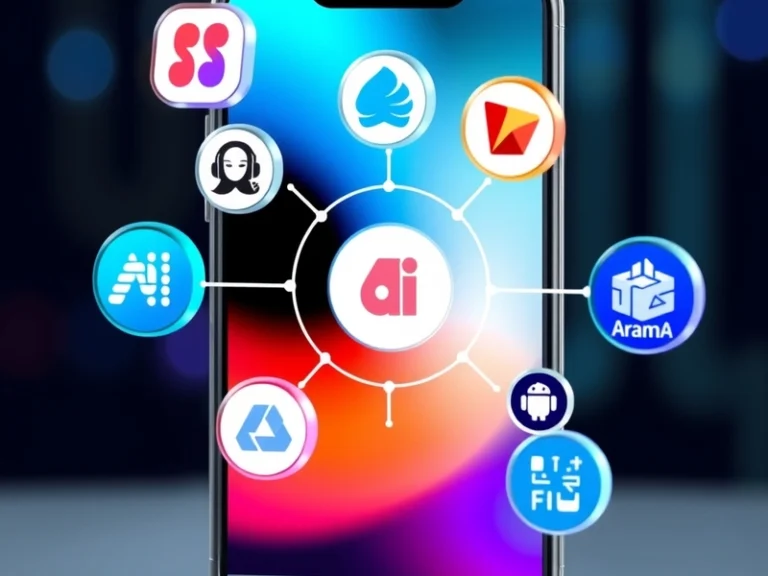
The mobile artificial intelligence landscape is poised for a significant transformation, with growing speculation that future iterations of Apple’s iOS could integrate a diverse array of third-party AI models, moving beyond a purely proprietary approach for capabilities like those offered by Siri.
For years, Apple has championed a vertically integrated strategy, developing its own silicon and software to power features across its ecosystem. This has extended to AI, with Siri, on-device machine learning for photo recognition, and predictive text all relying on Apple’s internal research and development. However, the rapid ascent of powerful generative AI models from companies like OpenAI, Google, and Microsoft has created a new competitive dynamic. These models, exemplified by ChatGPT and Gemini, offer advanced conversational abilities, complex reasoning, and creative generation that often surpass the current capabilities of built-in voice assistants.
The potential shift towards integrating “rival” AI technologies is not merely about keeping pace; it represents a strategic pivot to maintain the relevance and utility of the iOS platform in an AI-first world. Users are increasingly seeking sophisticated AI interactions, and a platform that can seamlessly orchestrate the best available models, regardless of their origin, could offer a compelling advantage.
The Technical and Experiential Hurdles of Integration
Incorporating external AI models into a tightly controlled ecosystem like iOS presents several complex challenges:
- API Design and Performance: Apple would need to develop robust, secure, and performant APIs that allow third-party models to interact with the operating system and user data while maintaining responsiveness. Latency for cloud-based inference is a critical consideration for real-time interactions.
- On-Device vs. Cloud Inference: Many advanced generative AI models are too large to run entirely on current mobile hardware, necessitating cloud-based inference. This introduces network dependency and potential privacy implications. Apple’s historical emphasis on on-device processing for privacy would need careful reconciliation.
- User Interface and Experience: How would users interact with multiple AI models? Would Siri act as an intelligent router, directing queries to the most appropriate model, or would users explicitly select which AI to use for specific tasks? A seamless, intuitive experience would be paramount to avoid fragmentation.
- Security and Privacy: Apple’s stringent privacy policies are a cornerstone of its brand. Integrating third-party AI models would require robust data governance, clear user consent mechanisms, and potentially sandboxing to ensure that sensitive user data is not inadvertently exposed or misused by external services.
Enhanced Personalization and Capabilities for Users
Despite the challenges, the benefits for users could be substantial. A mobile OS that can leverage a diverse array of AI models would offer:
- Specialized Intelligence: Users could access AI models optimized for specific tasks, whether it’s creative writing, complex coding assistance, scientific research, or highly nuanced conversational support, directly from their device.
- Improved Accuracy and Relevance: By drawing on the strengths of different models, the overall intelligence and contextual understanding of the mobile AI experience could be significantly enhanced, leading to more accurate responses and personalized recommendations.
- Developer Opportunities: Opening the platform to third-party AI could foster a vibrant ecosystem of specialized AI applications and services, much like the App Store revolutionized mobile software.
Siri’s Evolving Role
Siri, Apple’s long-standing voice assistant, would likely be at the forefront of this evolution. Instead of being solely reliant on Apple’s internal AI, Siri could transform into an intelligent orchestrator, capable of identifying user intent and routing requests to the most suitable underlying AI model, whether it’s an Apple-developed solution for certain on-device tasks or a third-party generative AI for complex creative or analytical queries. This would elevate Siri from a primarily command-and-control interface to a much more versatile and intelligent assistant, capable of facilitating interactions with a broader spectrum of advanced AI capabilities.
This potential strategic shift by Apple, embracing a more open approach to AI integration within its mobile operating system, underscores the profound impact of generative AI on the technology industry. It reflects a recognition that in the rapidly advancing field of artificial intelligence, collaboration and diverse capabilities may be key to delivering the most compelling and personalized user experiences.