Google’s Gemini AI model is rapidly expanding its influence, reportedly reaching a user base of over one billion people through its deep integration across the company’s vast product ecosystem. This milestone highlights not just the accelerating adoption of generative artificial intelligence, but also a distinct strategy in how AI capabilities are delivered to a mainstream audience.
Unlike many standalone AI applications, Gemini’s immense reach is primarily a function of its embedment within services that billions of users already interact with daily. This approach allows Google to seamlessly inject advanced AI functionalities into familiar workflows, making generative AI an ambient, rather than an explicit, experience for many.
The Ecosystem Advantage: How Gemini Reaches Billions
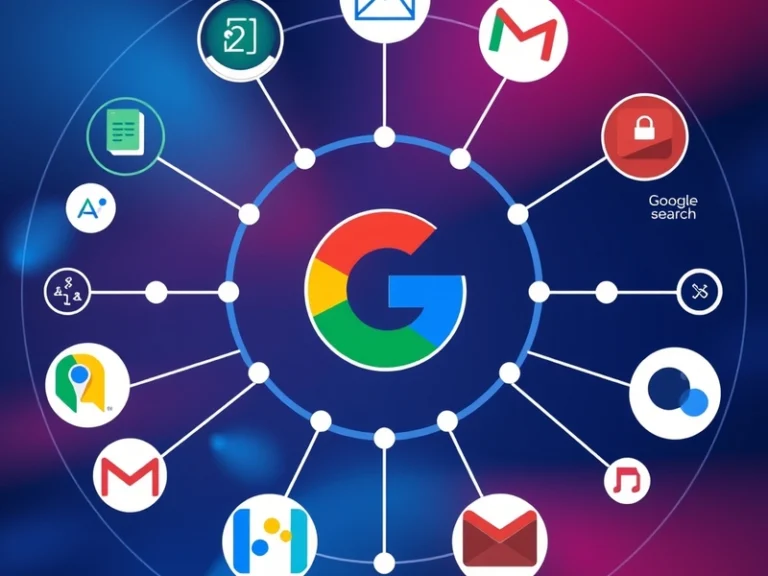
Gemini’s journey to a billion-user footprint is intrinsically tied to its strategic deployment across Google’s most popular platforms. Rather than relying solely on users actively seeking out a dedicated Gemini application, Google has positioned its flagship AI model as the intelligence layer underpinning its established services.
- Android Integration: As the core AI for Android devices, Gemini powers features within the operating system itself, offering enhanced capabilities that touch a global smartphone user base.
- Google Search: Gemini’s influence extends to Google Search, where it contributes to more sophisticated query understanding, improved results, and nascent generative answers, impacting virtually every internet user.
- Google Workspace: Within productivity tools like Gmail, Google Docs, Slides, and Meet, Gemini assists with drafting emails, summarizing documents, generating presentations, and facilitating meetings, becoming an invaluable assistant for professionals and students.
- Google Assistant Evolution: Gemini is progressively becoming the foundational AI for Google Assistant, transforming how users interact with their devices and smart home ecosystems through voice and text commands.
- YouTube: Features like video summarization or content creation assistance leverage Gemini’s multimodal understanding, enhancing the experience for both viewers and creators on the world’s largest video platform.
This pervasive integration means that a user might engage with Gemini without even explicitly realizing it, experiencing its capabilities as an enhancement to an existing Google product rather than as a separate AI tool.
Unique Usage Patterns: Ambient, Multimodal, Ubiquitous
The scale of Gemini’s adoption also illuminates unique usage patterns that differentiate it from other prominent AI models. Its design philosophy emphasizes multimodality and ubiquity, enabling a broader spectrum of interactions.
Ambient AI in Action
One of Gemini’s defining characteristics is its role as an “ambient AI.” Instead of requiring users to navigate to a specific chatbot interface for every task, Gemini often operates in the background, surfacing relevant information or offering assistance proactively. For example, it might suggest replies in Gmail, help organize notes in Google Keep, or provide contextual information within Google Maps. This reduces friction and integrates AI into the natural flow of digital life.
Multimodal Capabilities
Gemini was designed from the outset as a multimodal model, capable of understanding and generating content across text, images, audio, and video. This capability is crucial for its widespread adoption, as it allows for more natural and diverse interactions. Users can upload images and ask questions about them, describe a scene to generate text, or interact with voice commands through Google Assistant. This comprehensive understanding of various data types expands the practical applications of AI significantly beyond text-only interactions.
Ubiquitous Accessibility
The sheer number of devices and platforms where Gemini is available contributes to its vast reach. From high-end smartphones and web browsers to entry-level Android devices, Gemini’s core capabilities are accessible to a diverse global audience. While premium features are offered through services like Gemini Advanced or Workspace AI add-ons, a substantial portion of its utility is integrated into free Google products, democratizing access to powerful AI tools.
Implications for the AI Landscape
Gemini’s expansive user base has profound implications for Google and the broader AI industry. For Google, it solidifies its strategic advantage in leveraging its existing ecosystem to deploy cutting-edge AI at an unparalleled scale. This integration creates a formidable moat against competitors, as few companies possess the same breadth of widely adopted products.
For the AI landscape, Gemini’s trajectory underscores a shift towards integrated, ambient AI experiences. While dedicated AI chatbots continue to evolve, the future of AI adoption for many will likely involve capabilities seamlessly woven into the software and devices they already use. This widespread deployment also generates an immense feedback loop, providing Google with vast amounts of data to further refine and improve Gemini’s performance and capabilities.
As generative AI becomes an increasingly integral part of everyday digital life, the challenges around data privacy, algorithmic bias, and responsible deployment will only intensify. Google’s management of Gemini’s billion-user scale will serve as a crucial test case for how these complex issues are addressed in the era of pervasive AI.