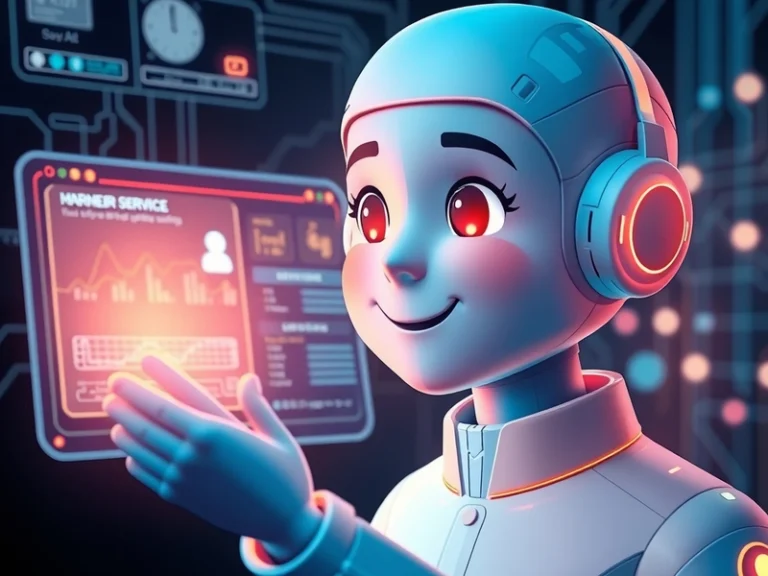
Google is actively advancing the development and deployment of real-time talking avatars, poised to significantly reshape the landscape of customer interactions across various industries.
The concept, building on years of research in conversational AI and generative media, envisions digital agents that not only understand and generate natural language but also possess a lifelike or brand-consistent visual presence, complete with realistic facial expressions, lip-syncing, and body language. These sophisticated systems integrate multiple cutting-edge AI technologies to create a seamless, interactive experience.
The Technological Underpinnings
At its core, a live avatar system relies on a tightly integrated stack of artificial intelligence capabilities:
- Natural Language Understanding (NLU): This component processes customer queries, understanding intent, entities, and context from spoken or typed input. Google’s extensive work in models like Gemini (and its predecessors such as LaMDA and PaLM 2) provides a robust foundation for this.
- Natural Language Generation (NLG): Once the intent is understood, NLG formulates a coherent, contextually appropriate response in human-like language. The quality of these responses is critical for effective communication.
- Text-to-Speech (TTS) Synthesis: The generated text is then converted into natural-sounding speech. Modern TTS systems can emulate various voices, tones, and even emotional nuances, moving far beyond robotic pronunciations. Google’s WaveNet and Tacotron models have been instrumental in this progress.
- Generative Visual AI: This is where the “avatar” comes to life. Advanced generative models create and animate the digital human or character in real-time. This involves:
- Face Generation: Creating a consistent and believable digital face.
- Lip-Syncing: Accurately synchronizing the avatar’s mouth movements with the synthesized speech.
- Facial Expressions: Conveying emotions and reactions through subtle changes in the avatar’s face.
- Body Language: Generating gestures and postures that enhance communication and realism.
- Low-Latency Processing: For a “live” experience, all these components must operate with minimal delay, ensuring a natural conversational flow. This requires significant computational power and optimized algorithms.
Transforming Customer Service
The implications of such real-time talking avatars for customer service are profound, offering a blend of efficiency and enhanced user experience:
- 24/7 Availability: Avatars can provide support around the clock, independent of human agent availability or time zones, significantly reducing customer wait times.
- Scalability: Businesses can handle a massive volume of simultaneous customer interactions without proportional increases in human staffing. This is particularly valuable during peak demand.
- Consistent Brand Experience: Avatars can be designed to embody a brand’s aesthetic and tone, ensuring a consistent voice and visual representation across all customer touchpoints.
- Multilingual Support: With advanced translation and speech synthesis capabilities, avatars can seamlessly interact with customers in multiple languages, broadening a company’s reach.
- Personalization: Integrated with CRM systems, avatars can access customer history and preferences to offer highly personalized assistance, making interactions more relevant and efficient.
- Cost Efficiency: While initial development and deployment costs can be significant, the long-term operational savings from reduced human agent hours and increased efficiency can be substantial.
Challenges and Ethical Considerations
Despite the technological prowess, the widespread adoption of live avatars is not without its hurdles:
- “Uncanny Valley” Effect: If the avatar is too realistic but not quite perfect, it can evoke feelings of unease or revulsion in users. Striking the right balance between realism and stylization is a design challenge.
- Handling Complex Emotions and Nuances: While AI is improving, truly empathetic understanding and response to highly emotional or complex customer issues remain a domain where human agents often excel.
- Data Privacy and Security: Interacting with avatars often involves sharing personal information. Ensuring robust data protection and transparent privacy policies is paramount.
- Job Displacement: The increased automation of customer service roles raises concerns about the impact on human employment, necessitating strategies for workforce reskilling and adaptation.
- Maintaining Accuracy: AI models, while powerful, can sometimes generate incorrect or misleading information. Robust oversight and mechanisms for correction are crucial, especially in critical service contexts.
- Technical Reliability: Any glitches or breakdowns in the real-time processing chain can severely degrade the customer experience, highlighting the need for highly stable and performant systems.
Google’s continued investment in foundational AI models like Gemini, coupled with its expertise in real-time rendering and user experience design, positions it as a key player in this evolving space. While the full realization of truly indistinguishable AI avatars may still be some time away, the incremental advancements are already beginning to redefine what’s possible in automated customer engagement. The focus is shifting from mere automation to creating more engaging, intuitive, and visually rich digital interactions.