The AI community is buzzing as Grok Imagine, an advanced multimodal AI system, embarks on an ambitious project to transform Homer’s ancient Greek epic, The Odyssey, into a visually compelling AI-generated series. This initiative marks a significant step in how artificial intelligence can reinterpret and present classic literature, moving beyond text-based analysis to full-fledged visual storytelling.
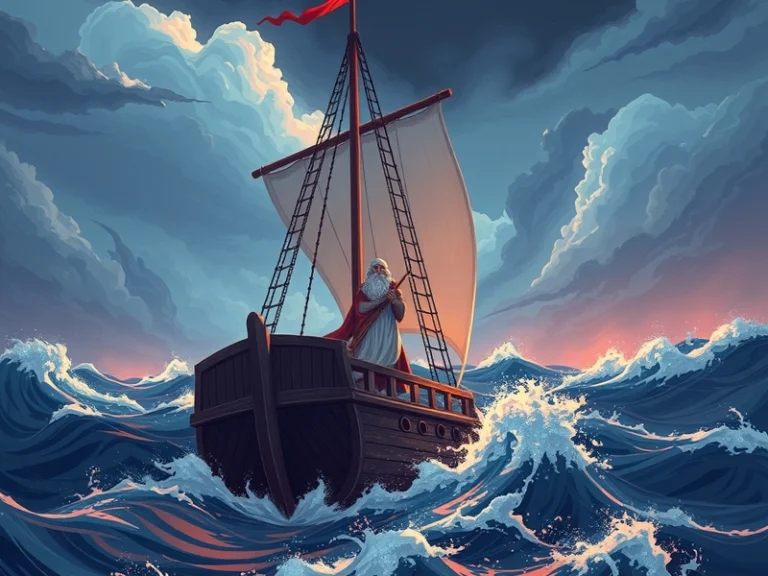
Grok Imagine, likely leveraging the extensive capabilities of its parent company xAI’s Grok large language model, appears poised to tackle the complex task of translating thousands of lines of poetry into a coherent and engaging visual narrative. While specific technical details of Grok Imagine’s underlying architecture remain proprietary, it is understood to be a system capable of generating dynamic visual content from textual prompts, a critical feature for adapting a work as descriptive and expansive as The Odyssey. The project aims to bring the perilous journey of Odysseus, his encounters with mythical creatures, and his long-awaited return to Ithaca to life through AI-driven animation or video sequences, offering a fresh perspective on a story that has resonated for millennia.
Why The Odyssey? A Canvas for AI Creativity
The choice of Homer’s The Odyssey is particularly apt for an AI-driven visual adaptation for several reasons:
- Rich, Descriptive Source Material: The epic poem is renowned for its vivid imagery and detailed descriptions of characters, settings, and events, providing a robust textual foundation for AI models to interpret and render visually. From the cyclops Polyphemus to the sirens’ perilous songs, the narrative is packed with distinct visual opportunities.
- Enduring Narrative Appeal: As one of the foundational texts of Western literature, The Odyssey‘s themes of heroism, perseverance, and the human condition remain universally relevant. This broad appeal ensures a wide potential audience for an AI-generated series.
- Public Domain Status: Being an ancient work, The Odyssey is free from modern copyright restrictions, allowing for creative adaptations without complex licensing hurdles. This freedom enables AI systems to explore the narrative without commercial encumbrances often associated with contemporary works.
- Epic Scope and Scale: The lengthy and episodic nature of Odysseus’s journey provides ample material for a series format, challenging AI to maintain consistency and narrative flow across numerous distinct sequences and environments.
The Technical Odyssey: Challenges and Innovations in AI Visual Generation
Adapting a work of this magnitude presents a unique set of technical challenges that push the boundaries of current AI capabilities. Grok Imagine’s success will hinge on its ability to address several key areas:
Character and Asset Consistency: One of the most significant hurdles in AI-generated long-form video is maintaining visual consistency for characters, objects, and environments across different scenes and episodes. Odysseus must consistently look like Odysseus, and the ship Argo, or the palace in Ithaca, should retain their visual identity throughout the narrative. Early AI video generation models often struggle with this, producing flickering or inconsistent representations. Grok Imagine will likely employ advanced diffusion models and latent space manipulation techniques to ensure a stable visual identity for key elements.
Narrative Coherence and Emotional Arc: Beyond visual fidelity, the AI must accurately interpret the emotional tone and narrative progression of the epic. This requires understanding context, character motivations, and the subtle shifts in atmosphere described in the text. The AI needs to translate the tension of a monster encounter or the pathos of a reunion into appropriate visual pacing, camera angles, and character expressions, which goes beyond simple object generation.
Artistic Style and Interpretation: The visual style adopted by Grok Imagine will be crucial. Will it opt for a realistic aesthetic, a stylized interpretation, or a blend of both? The AI will need to synthesize a cohesive artistic direction that honors the source material while offering a fresh visual experience. This involves not just rendering objects but establishing lighting, color palettes, and compositional choices that convey the story’s grandeur and drama.
Prompt Engineering and Human Oversight: While AI generates the visuals, significant human input in the form of detailed prompt engineering and subsequent curation will undoubtedly be essential. Human artists and storytellers will likely guide the AI, refining outputs, selecting the best generations, and stitching together sequences to form a cohesive series. This collaborative approach highlights AI’s role as a powerful tool that augments human creativity rather than entirely replacing it.
Broader Implications for Creative Industries
The Grok Imagine Odyssey project serves as a compelling case study for the evolving relationship between AI and creative content production. Its success could signal several shifts:
- Democratization of Visual Storytelling: Advanced AI tools could significantly lower the barrier to entry for producing high-quality animated or video content, enabling independent creators and smaller studios to realize ambitious visual projects without extensive traditional animation pipelines.
- New Forms of Adaptation and Interpretation: AI offers novel ways to re-examine and present classic works. Imagine interactive visual novels generated on the fly, or multiple stylistic interpretations of the same story, all powered by AI.
- Augmented Creative Workflows: Rather than replacing human artists, AI is increasingly demonstrating its potential to accelerate and enhance creative workflows, handling tedious tasks or generating initial concepts that human experts can then refine and direct.
The endeavor by Grok Imagine to visually adapt The Odyssey is more than just an experiment in AI art; it is a live demonstration of how advanced AI systems are beginning to tackle complex, long-form narrative challenges. As the project unfolds, it promises to offer valuable insights into the current capabilities and future potential of generative AI in transforming how we consume and create visual stories.