While the title suggests a major development, as of current public knowledge, there has been no official announcement or confirmation of an acquisition of Cursor by SpaceX. Public records and news outlets have not reported such a transaction. Therefore, any discussion of “Cursor joining forces with SpaceX” must, at this time, be framed as a hypothetical analysis of potential implications, should such a development ever materialize.
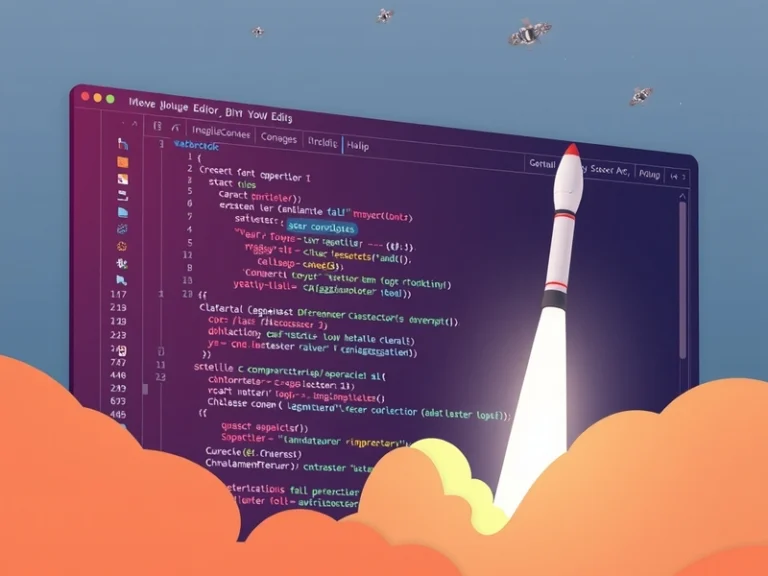
Cursor, developed by Cursor Labs, has emerged as a notable AI-first code editor designed to augment developer productivity. It distinguishes itself by integrating large language models (LLMs) directly into the coding workflow, offering features like code generation, debugging assistance, chat-based code modification, and smart documentation retrieval. Its core proposition is to make coding faster and more intuitive by leveraging AI as a primary interface for development tasks, moving beyond traditional autocomplete to more sophisticated, context-aware assistance. The editor supports various programming languages and environments, aiming to cater to a broad base of software engineers.
SpaceX, on the other hand, is a private American aerospace manufacturer and space transport services company founded by Elon Musk. Its ambitious goals include reducing space transportation costs, enabling the colonization of Mars, and deploying a large constellation of internet satellites, Starlink. To achieve these objectives, SpaceX relies heavily on highly sophisticated software engineering. This includes complex flight control systems for its Falcon rockets and Starship vehicles, satellite operation software for Starlink, ground control systems, and internal enterprise applications. The sheer scale and mission-critical nature of SpaceX’s software development demand extreme precision, efficiency, and reliability.
Hypothetical Implications of a Cursor Acquisition by SpaceX
Should SpaceX acquire Cursor, the implications could be significant, spanning both internal operational enhancements for SpaceX and potential shifts in the broader AI development tools landscape. This hypothetical scenario presents several avenues for impact:
- Accelerated Internal Software Development: SpaceX’s development cycles are intense. Integrating an AI-first editor like Cursor could dramatically accelerate code generation, debugging, and testing for its vast array of software systems. This could be particularly impactful for areas requiring rapid iteration, such as ground control software, data analysis pipelines for flight telemetry, or even aspects of Starlink’s network management.
- Specialized AI Tooling for Aerospace: With Cursor’s technology in-house, SpaceX could tailor the underlying LLMs and editor features to its specific domain. This might involve training models on proprietary SpaceX codebases, aerospace engineering standards, and mission-critical safety protocols. The result could be an AI assistant uniquely capable of understanding and generating code compliant with stringent space-grade requirements, potentially reducing errors in critical systems.
- Enhanced Code Quality and Reliability: AI-powered tools can assist in identifying potential bugs, security vulnerabilities, or inefficiencies early in the development process. For SpaceX, where software failures can have catastrophic consequences, leveraging Cursor’s capabilities for automated code review and suggestion could elevate the overall reliability and robustness of its systems.
- Talent Attraction and Retention: In an increasingly competitive tech landscape, offering cutting-edge AI-powered development tools could be a draw for top engineering talent. Developers are often keen to work with the most advanced tools available, and an internally optimized Cursor could serve as a powerful incentive.
Broader Industry Impact and Challenges
Beyond SpaceX’s internal operations, such an acquisition could send ripples through the AI development tools industry:
- Validation of AI-First Editors: A high-profile acquisition by a company known for its engineering prowess and demanding requirements would serve as a strong validation for the entire category of AI-first code editors. It would signal that these tools are not merely productivity enhancers for general-purpose coding but are mature enough for mission-critical applications.
- Shift in Developer Tooling Paradigms: If SpaceX successfully integrates and leverages Cursor’s technology to gain a competitive edge, it could pressure other aerospace, automotive, or critical infrastructure companies to invest more heavily in similar AI-driven development solutions.
- Challenges in Integration and Specialization: An acquisition would not be without its challenges. Integrating Cursor Labs’ team and technology into SpaceX’s distinct engineering culture would require careful management. Furthermore, balancing Cursor’s general-purpose appeal with the need for specialized, highly secure internal tools for SpaceX could be a delicate act. There’s also the question of whether Cursor would continue to be offered as a standalone product or become an exclusive internal tool, which would impact its broader market presence.
In summary, while the reported acquisition of Cursor by SpaceX remains unconfirmed in public channels, the hypothetical scenario offers a compelling look at the potential convergence of advanced AI coding tools with the demanding world of aerospace engineering. Such a move could significantly enhance SpaceX’s internal development capabilities while simultaneously validating and reshaping the future of AI-powered software development across industries.