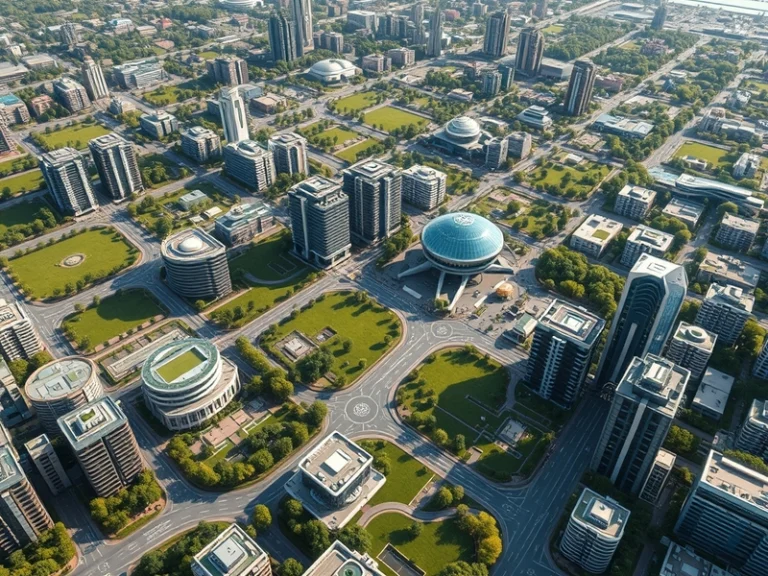
The ambitious vision of concentrating 10,000 AI scientists within a single urban center to dramatically accelerate innovation is gaining traction in discussions about the future of AI research and development.
This concept, while hypothetical in its precise scale, reflects a growing understanding of how proximity and critical mass can foster breakthroughs. The underlying premise is that by bringing together a vast number of researchers, engineers, and entrepreneurs from diverse AI disciplines—ranging from deep learning and natural language processing to robotics and computer vision—a powerful ecosystem emerges, capable of rapid knowledge transfer and unprecedented collaboration.
The Appeal of Critical Mass for AI Innovation
Proponents of such concentrated hubs point to several key advantages:
- Accelerated Knowledge Transfer: The informal exchange of ideas, rapid feedback loops on experimental results, and spontaneous collaborations that occur in close physical proximity can significantly shorten research cycles. This “serendipitous encounter” effect is often cited as a cornerstone of historical innovation centers.
- Talent Magnetism: A large, vibrant hub naturally attracts more top-tier talent, creating a virtuous cycle. Researchers are drawn to places where they can find peers, mentors, and cutting-edge resources, further solidifying the hub’s intellectual capital.
- Shared Infrastructure and Resources: High-performance computing resources, specialized datasets, advanced robotics labs, and other expensive infrastructure can be more efficiently shared and scaled within a concentrated geographic area, reducing individual project costs and increasing accessibility.
- Cross-Pollination of Ideas: Bringing together experts from different AI sub-fields, as well as adjacent disciplines like neuroscience, materials science, or ethics, can spark novel interdisciplinary approaches and solutions that might not emerge in more siloed environments.
- Robust Funding Ecosystem: A concentration of talent and innovation naturally attracts venture capital, government grants, and corporate R&D investments, creating a strong financial pipeline to support new ventures and long-term research projects.
Historically, regions like Silicon Valley, Boston’s Route 128 corridor, and London’s “Tech City” have demonstrated the power of geographic concentration for technological advancement, albeit not always with a singular focus on AI or on the scale of 10,000 dedicated scientists. These areas benefited from a confluence of leading universities, corporate research labs, and a culture of entrepreneurship, creating fertile ground for innovation.
Challenges and Considerations for Hyper-Concentrated Hubs
While the benefits are compelling, realizing a hub of this magnitude presents significant challenges:
- Infrastructure Strain: A sudden influx of 10,000 highly skilled workers, along with their support staff and families, would place immense pressure on existing urban infrastructure—housing, transportation, utilities, and public services. Careful planning and substantial investment would be required to prevent bottlenecks and ensure livability.
- Cost of Living and Competition: High demand for talent and housing in a concentrated area inevitably drives up costs. This can make the hub unaffordable for some, potentially limiting diversity, and create intense competition for skilled professionals, leading to escalating salaries and potential poaching.
- Brain Drain and Global Disparities: Such a powerful magnet for AI talent could exacerbate a “brain drain” from other regions and countries, further concentrating AI development in a few select locations and potentially widening global technological disparities.
- Risk of Monoculture and Groupthink: While diversity of disciplines is beneficial, an overly homogenous culture or a strong dominant paradigm within a hyper-concentrated hub could inadvertently stifle truly radical or contrarian ideas. Maintaining intellectual diversity would be crucial.
- Ethical and Governance Considerations: Concentrating such immense intellectual power and technological capability raises questions about governance, ethical oversight, and the potential for dual-use technologies. The societal implications of such a hub would need careful consideration from its inception.
The concept of a singular, massive AI research hub represents an ambitious theoretical extreme in the pursuit of accelerated innovation. While the allure of unprecedented collaboration and rapid progress is strong, the practicalities of planning, funding, and managing such an endeavor—including its profound societal and economic impacts—would be formidable. The ongoing evolution of AI research will likely continue to see a mix of distributed global networks and strategically concentrated clusters, each playing a vital role in advancing the field.