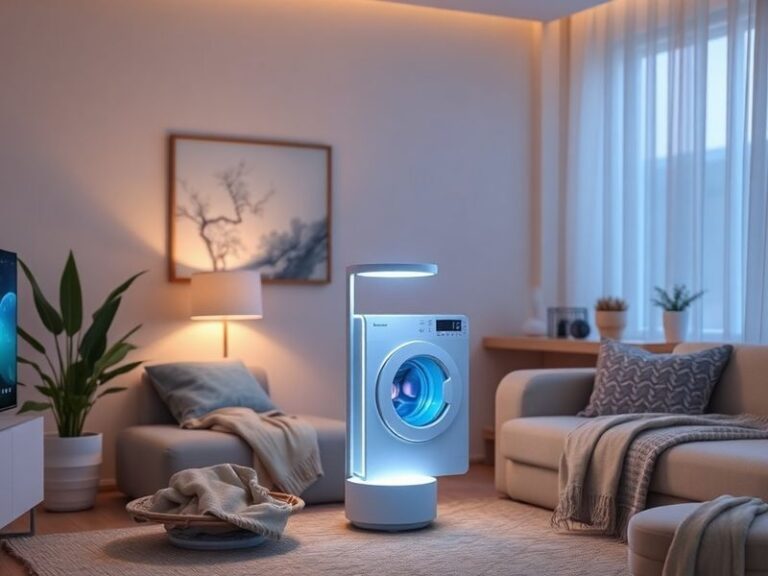
The Rise of AI in Home Automation: Meet Lume
As technology continues to evolve, the integration of artificial intelligence (AI) into our daily lives is becoming increasingly sophisticated. One of the most exciting advancements in this domain is the emergence of smart home devices that not only enhance convenience but also redefine household tasks. Among these innovations is Lume, a smart lamp that goes beyond mere illumination to tackle the often tedious chore of laundry folding. This article explores how Lume exemplifies the rise of AI in home automation and the implications for the future of household management.
What is Lume?
Lume is a groundbreaking smart lamp that leverages AI and machine learning to revolutionize household chores. Here’s what makes it unique:
- Smart Illumination: At its core, Lume provides adjustable lighting that can adapt to your mood and needs, offering everything from a warm glow for relaxation to bright light for tasks.
- Laundry Folding Assistant: Equipped with advanced robotics and AI, Lume can autonomously fold laundry, offering a solution to one of the most time-consuming household tasks.
- Integration with Smart Home Ecosystems: Lume connects seamlessly with other smart devices, allowing for a cohesive smart home experience where tasks can be automated and managed from a central hub.
The Technological Backbone Behind Lume
The success of Lume hinges on several technological advancements:
- Computer Vision: Lume utilizes computer vision to accurately identify different types of clothing and determine the most efficient folding method for each item.
- Machine Learning Algorithms: These algorithms enable Lume to learn from user preferences and improve its folding efficiency over time, tailoring its approach to individual needs.
- Robotics: The physical mechanism within Lume is designed to handle delicate fabrics, ensuring that clothes are not only folded but also treated with care.
Practical Insights: How Lume Enhances Daily Life
Integrating Lume into a household can lead to several practical benefits:
- Time Savings: By automating laundry folding, users can reclaim hours of their week, allowing them to focus on more enjoyable activities.
- Consistent Results: Lume ensures that every piece of clothing is folded uniformly, eliminating the variability that often comes from manual folding.
- Enhanced Home Aesthetics: As a stylish lamp, Lume serves a dual purpose, contributing to home decor while also functioning as a practical tool.
- Reduced Stress: By streamlining household chores, Lume can help reduce the stress associated with maintaining a tidy home.
Industry Implications of AI in Home Automation
The introduction of AI-powered devices like Lume has significant implications for the home automation industry:
- Market Growth: The demand for smart home devices is on the rise, with consumers increasingly seeking solutions that enhance convenience and efficiency in their daily lives.
- Increased Competition: As more companies enter the market, innovation is likely to accelerate, leading to even more advanced and integrated home automation systems.
- Consumer Expectations: With devices like Lume setting new standards, consumers will expect continuous improvement and integration across their smart home ecosystems.
Future Possibilities: What Lies Ahead for Home Automation?
The future of AI in home automation looks promising, especially with innovations like Lume paving the way. Here are a few possibilities to consider:
- Expanded Functionality: Future iterations of Lume and similar devices may include additional features such as ironing or garment care, broadening their utility.
- Enhanced Connectivity: As IoT (Internet of Things) technologies advance, devices like Lume may communicate with smart washers and dryers for a fully automated laundry experience.
- Personalized Experiences: With the growth of AI, smart devices will likely offer more personalized interactions, adapting their functionalities based on individual user habits and preferences.
- Sustainability Integration: Future innovations might focus on sustainable practices, such as energy-efficient operations and eco-friendly materials in their construction.
Conclusion
The rise of AI in home automation, exemplified by Lume, signifies a transformative shift in how we manage household chores. By leveraging cutting-edge technology to automate tedious tasks, Lume is not just a smart lamp; it is a glimpse into the future of efficient living. As the industry continues to evolve, the potential for AI to reshape our homes and lives is limitless, promising a new era of convenience, efficiency, and improved quality of life.