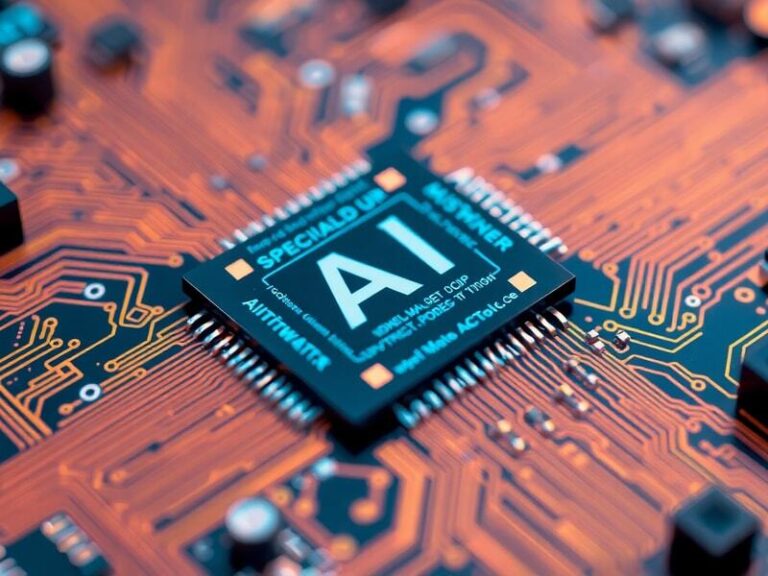
The Rise of Specialized AI Chips
The rapid advancement of artificial intelligence (AI) has catalyzed an unprecedented demand for computing power. As traditional processors struggle to keep pace with AI workloads, a new generation of hardware has emerged: specialized AI chips. These dedicated chips are designed specifically for AI applications, providing significant improvements in performance and efficiency. In this article, we explore the rise of specialized AI chips, examining their impact on performance, practical applications, industry implications, and future possibilities.
What Are Specialized AI Chips?
Specialized AI chips, often referred to as AI accelerators, are hardware components tailored to perform AI tasks more efficiently than general-purpose processors like CPUs or even traditional GPUs. They are optimized for the unique requirements of AI workloads, such as:
- Parallel processing: AI tasks often involve processing large datasets simultaneously, which specialized chips handle more effectively.
- Low power consumption: AI accelerators are designed to provide high performance without excessive energy use, making them suitable for mobile and edge computing.
- Custom architectures: Many AI chips feature architectures that optimize data flow and memory access specifically for AI algorithms.
Types of Specialized AI Chips
Several types of specialized AI chips have emerged, each catering to different aspects of AI processing:
- Tensor Processing Units (TPUs): Developed by Google, TPUs are designed for machine learning tasks, particularly those involving neural networks.
- Field-Programmable Gate Arrays (FPGAs): These chips can be programmed to perform specific tasks, making them highly versatile for various AI applications.
- Application-Specific Integrated Circuits (ASICs): These are custom-built chips optimized for a specific application, offering high performance for particular AI tasks.
- Graphics Processing Units (GPUs): Although traditionally used for graphics rendering, GPUs have been adapted for many AI tasks due to their parallel processing capabilities.
Impact on Performance
The introduction of specialized AI chips has led to remarkable improvements in performance across various AI applications:
- Faster training times: Specialized chips can significantly reduce the time it takes to train deep learning models, enabling faster iteration and development cycles.
- Improved inference speeds: For applications that require real-time decision-making, such as autonomous vehicles or voice assistants, AI accelerators can process data more quickly than traditional processors.
- Enhanced scalability: Organizations can scale their AI capabilities more effectively by deploying specialized chips, allowing them to handle larger datasets and more complex models.
Practical Insights
As businesses increasingly adopt AI technologies, understanding the practical implications of specialized AI chips is crucial:
- Cost Efficiency: While the initial investment in specialized chips may be higher, their efficiency can lead to significant long-term savings in energy and operational costs.
- Integration Challenges: Companies must consider how to integrate specialized chips into their existing infrastructure, which may require changes to software and workflows.
- Skill Development: As the demand for specialized chips grows, so does the need for skilled professionals who understand how to leverage these technologies effectively.
Industry Implications
The rise of specialized AI chips is reshaping various industries:
- Healthcare: AI accelerators are being used to analyze medical images and assist in diagnostics, improving patient outcomes.
- Finance: In the financial sector, specialized chips enable real-time fraud detection and risk assessment, enhancing security measures.
- Automotive: Autonomous vehicles rely heavily on AI chips for processing sensor data and making split-second decisions.
Future Possibilities
As technology continues to evolve, the future of specialized AI chips looks promising:
- Increased Collaboration: We can expect more collaboration between chip manufacturers and AI researchers, leading to innovations tailored to emerging AI applications.
- Edge Computing: The growth of IoT devices will drive demand for specialized chips that can perform AI tasks locally, reducing latency and bandwidth usage.
- AI Democratization: As specialized chips become more accessible, smaller organizations will be empowered to develop and implement AI solutions, leveling the competitive landscape.
In conclusion, the rise of specialized AI chips marks a significant milestone in the evolution of artificial intelligence. By providing tailored solutions for AI tasks, these chips enhance performance, drive innovation, and open new avenues for application across various industries. As we look to the future, the continued development and adoption of specialized AI chips will undoubtedly play a critical role in shaping the next generation of technology.