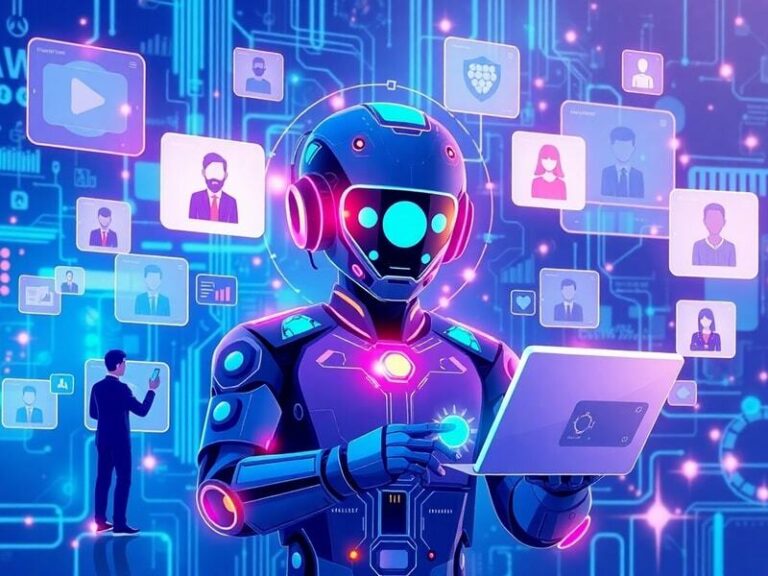
Meta’s AI Agents for Businesses: Leveraging Automation for Customer Interactions
In today’s rapidly evolving digital landscape, businesses are constantly seeking innovative solutions to enhance customer experience and streamline operations. One of the most significant advancements in this arena is the emergence of AI agents. Meta, formerly known as Facebook, is at the forefront of this transformation, offering powerful AI tools designed to automate customer interactions across various platforms. This article delves into how companies can leverage Meta’s AI agents to optimize their customer service strategies, the implications for industries, and what the future may hold for this technology.
Understanding AI Agents
AI agents are software applications that utilize artificial intelligence to perform tasks autonomously. In the context of customer service, these agents can engage with customers on multiple platforms, including social media, websites, and messaging apps, providing instant support and information. Meta’s AI agents are designed to understand natural language, making interactions feel more human-like and intuitive.
Benefits of Implementing AI Agents
Businesses that adopt AI agents can reap numerous benefits, including:
- 24/7 Availability: AI agents can operate around the clock, ensuring that customer inquiries are addressed at any time.
- Cost Efficiency: Automating customer interactions reduces the need for a large support team, resulting in significant cost savings.
- Scalability: As a business grows, AI agents can easily scale to handle increased customer interactions without a proportional increase in costs.
- Consistency: AI agents provide uniform responses, maintaining brand voice and ensuring that customers receive the same quality of service.
- Data Collection: These agents can gather valuable customer data, offering insights into preferences and behaviors that can inform business strategies.
Practical Insights for Businesses
To successfully implement Meta’s AI agents, businesses should consider the following practical insights:
- Identify Use Cases: Before deploying AI agents, determine which customer service functions can be automated. Common use cases include answering frequently asked questions, booking appointments, and processing orders.
- Integrate Seamlessly: Ensure that AI agents are integrated into existing systems and platforms. This could involve linking chatbots to CRM systems or social media accounts.
- Train the AI: Customize the AI agents by training them with relevant data from your business. This helps the agents understand specific inquiries and respond accurately.
- Monitor Performance: Regularly assess the performance of AI agents through metrics such as response time, customer satisfaction scores, and resolution rates. This data can guide improvements.
- Maintain Human Oversight: While AI agents can handle many tasks, having human support available for complex inquiries is crucial. Ensure a seamless transition between AI and human agents when necessary.
Industry Implications
The integration of AI agents into customer service is already having profound implications across various industries:
- Retail: Retailers are using AI agents to enhance online shopping experiences, providing personalized product recommendations and handling inquiries instantly.
- Healthcare: In healthcare, AI agents assist in scheduling appointments and providing patients with essential information regarding their conditions.
- Finance: Financial institutions utilize AI agents for customer inquiries related to account balances, transaction history, and fraud detection.
- Travel: Travel companies employ AI agents to facilitate booking processes and provide travel updates, significantly improving customer satisfaction.
Future Possibilities
The future of AI agents looks promising as technology continues to advance. Here are some potential developments:
- Enhanced Natural Language Processing: Future AI agents will have even better language comprehension, allowing them to handle more complex conversations and nuances in language.
- Emotional Intelligence: The next generation of AI agents could incorporate emotional intelligence, enabling them to recognize customer emotions and respond empathetically.
- Increased Personalization: With deeper insights into customer behavior, AI agents can offer hyper-personalized experiences, tailoring interactions to individual needs.
- Collaboration with Human Agents: AI agents may work alongside human agents more seamlessly, assisting them in real-time and providing suggestions based on customer data.
As businesses continue to navigate the complexities of customer interactions, leveraging AI agents from Meta presents a significant opportunity for innovation and growth. By embracing these technologies, companies can not only enhance their customer service capabilities but also position themselves as leaders in the evolving digital landscape.