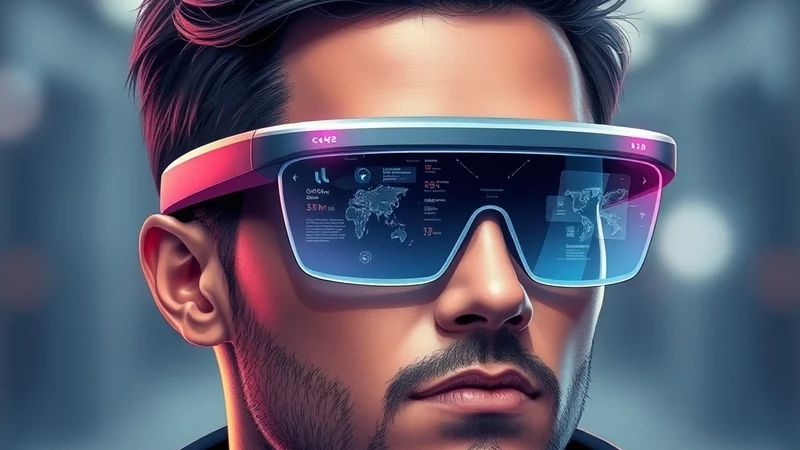
AI-Powered Augmented Reality: The Future of Wearable Tech
In recent years, the convergence of artificial intelligence (AI) and augmented reality (AR) has sparked a new wave of innovation in wearable technology. Among the frontrunners in this space is XREAL, a company that has integrated its Gemini technology into wearable devices, significantly enhancing user experiences. This article delves into the implications of this integration, its practical applications, and the future possibilities it unveils.
Understanding XREAL’s Gemini Technology
XREAL’s Gemini technology is an advanced platform that utilizes AI algorithms to improve the functionality and interactivity of AR devices. By leveraging machine learning, it enables wearables to analyze and interpret real-world environments, providing users with contextual information and immersive experiences.
- Enhanced Realism: Gemini technology enhances the realism of virtual objects by allowing them to interact seamlessly with the physical world.
- Personalized Experiences: The system learns from user interactions, tailoring content and functionalities to individual preferences.
- Real-Time Data Processing: With its robust AI backbone, Gemini can process vast amounts of data in real-time, ensuring quick responses and improved usability.
Practical Insights into Wearable Tech
The integration of AI-powered AR through XREAL’s Gemini technology offers several practical benefits that can revolutionize various industries:
- Healthcare: Wearable AR devices can assist surgeons during operations by overlaying critical information, thus reducing errors and improving outcomes.
- Education: Students can engage with interactive learning materials that adjust to their learning pace, making education more effective and enjoyable.
- Retail: Shoppers can visualize products in their homes before purchasing, leading to more informed buying decisions and increased sales for retailers.
Industry Implications
The implications of AI-powered AR technology extend beyond individual applications; they are poised to reshape entire industries:
- Enhanced Collaboration: In sectors such as design and engineering, teams can work together in virtual environments, regardless of their physical locations.
- Increased Efficiency: Businesses can streamline operations by utilizing AR for training and maintenance, reducing downtime and errors.
- Competitive Advantage: Companies that adopt these technologies early will likely gain a significant edge over competitors, driving innovation and market growth.
The Future of Wearable Tech with AI and AR
As we look toward the future, the potential for AI-powered AR in wearable technology is immense. Several trends are emerging that could define the next generation of these devices:
- Integration with IoT: Wearable AR devices will likely become interconnected with the Internet of Things (IoT), enabling users to control smart environments effortlessly.
- Advancements in AI: Continuous improvements in AI algorithms will lead to even greater personalization and functionality, making wearables more intuitive.
- Broader Adoption: As costs decrease and technology improves, we can expect widespread adoption across various sectors, from consumer electronics to industrial applications.
Conclusion
The integration of XREAL’s Gemini technology into wearable devices represents a significant leap forward in the realm of augmented reality and artificial intelligence. By enhancing user experiences through personalized, real-time interactions, this technology is set to transform industries and redefine how we engage with the world around us. As this field continues to evolve, the possibilities are boundless, promising a future where AI and AR coalesce to create extraordinary experiences.