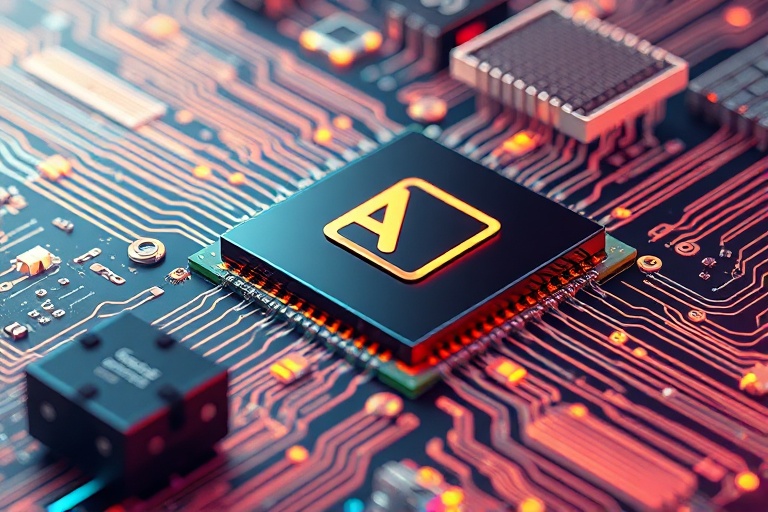
DeepSeek’s Strategic Shift: Developing an AI Chip
In the rapidly evolving landscape of artificial intelligence (AI) and technology, China’s DeepSeek is embarking on a strategic shift that could redefine its position in the semiconductor industry. By developing its own AI chip, DeepSeek aims to significantly reduce its dependence on established chip manufacturers like Nvidia, which currently dominate the market. This move not only signals a new era for DeepSeek but also carries implications for the global semiconductor industry and the future of AI development.
The Rationale Behind the Move
The decision to develop an AI chip stems from a combination of factors:
- Market Demand: As AI applications proliferate across various sectors, the demand for powerful and efficient chips has surged. Companies are looking for solutions that can handle complex computations without incurring heavy costs.
- Geopolitical Tensions: Ongoing trade disputes and restrictions imposed by the U.S. on technology exports to China have necessitated a shift towards self-sufficiency in tech production.
- Innovation Drive: Developing proprietary technology allows DeepSeek to innovate without the constraints imposed by existing suppliers’ architectures and roadmaps.
DeepSeek’s Vision for AI Chips
DeepSeek envisions creating AI chips tailored specifically for tasks such as deep learning and data processing. The goal is to optimize performance while minimizing energy consumption, thereby addressing one of the most critical challenges in AI computing.
- Performance: DeepSeek aims to enhance computational power, enabling faster processing times for machine learning models.
- Energy Efficiency: By focusing on energy-efficient designs, the new chips could help reduce operational costs for businesses implementing AI solutions.
- Scalability: The chips would be designed to scale with the growing needs of industries adopting AI technologies.
Industry Implications
DeepSeek’s initiative is poised to shake up the semiconductor landscape significantly. Here are some potential implications:
- Increased Competition: As DeepSeek enters the AI chip market, it could drive competition among existing players, prompting innovation and potentially lowering prices for consumers.
- Supply Chain Reevaluation: Companies reliant on foreign chip manufacturers may reconsider their supply chains, leading to a more localized production model.
- Technological Sovereignty: Countries like China focusing on self-reliance in technology may spur a wave of similar initiatives worldwide, promoting domestic tech industries.
Challenges Ahead
While the prospects are promising, DeepSeek faces considerable challenges in its quest to develop a competitive AI chip:
- Research and Development: Developing cutting-edge AI chips requires substantial investment in research and development, which involves both time and financial resources.
- Talent Acquisition: The semiconductor industry requires highly specialized skills. Attracting and retaining top talent will be crucial for DeepSeek’s success.
- Market Acceptance: Gaining the trust of consumers and businesses will be essential, especially when competing against established names like Nvidia.
Future Possibilities
Looking ahead, the implications of DeepSeek’s strategic shift could extend far beyond the company itself. Here are some future possibilities:
- Collaborative Innovation: DeepSeek may collaborate with universities and research institutions to foster innovation and accelerate development.
- Global Partnerships: Potential partnerships with other countries aiming to develop their semiconductor capabilities could emerge, fostering a collaborative ecosystem.
- AI Advancements: As more companies develop their AI chips, the overall pace of AI advancements could accelerate, leading to breakthroughs in various industries.
In conclusion, China’s DeepSeek is making a bold move by venturing into the AI chip market. This strategic shift not only aims to reduce dependence on established manufacturers like Nvidia but also positions the company as a potential leader in the burgeoning AI hardware industry. The implications of this shift could resonate across global markets, influencing how technology is developed, produced, and consumed in the years to come.