A significant development in the intersection of artificial intelligence and entertainment is unfolding, as news emerges that an AI-generated movie trailer is slated to become a full-length feature film. This marks a pivotal moment, moving AI from a production aid to a generative force capable of sparking entire cinematic projects, challenging traditional Hollywood development pipelines and opening new avenues for creative expression.
The journey from a short, AI-conceived visual concept to a greenlit feature film underscores the rapidly maturing capabilities of generative AI models. Historically, AI has been used in filmmaking for tasks like visual effects rendering, deepfake creation, or even script analysis. However, the creation of a compelling trailer – a narrative distillation designed to capture audience interest and convey a film’s essence – entirely or predominantly through AI, then seeing that concept expand into a full production, represents a new frontier.
From Latent Space to Storyboard: The AI Trailer’s Genesis
The creation of such a trailer typically involves a sophisticated interplay of various AI models, often guided by human prompt engineers and creative directors. The process can be broken down into several key stages:
- Concept Generation: Initial ideas, themes, or loglines are fed into large language models (LLMs) to generate potential narrative arcs, character concepts, or even rough screenplay segments.
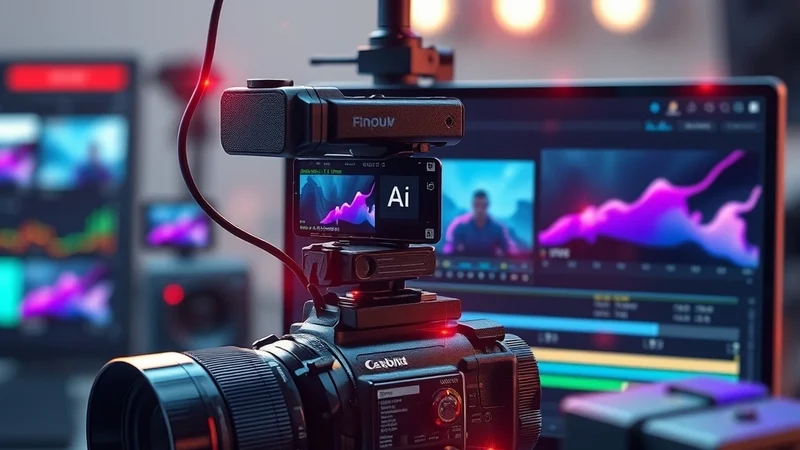
- Visual Synthesis: Text-to-image and text-to-video models play a crucial role. Tools based on diffusion architectures, for instance, can translate descriptive text prompts into a sequence of visually coherent frames or short video clips. These models are adept at generating diverse visual styles, character designs, and environments, often with remarkable consistency.
- Audio and Music Generation: AI models can compose original scores, generate sound effects, and even synthesize realistic voiceovers or dialogues based on script inputs. This allows for a complete audiovisual experience within the trailer, enhancing its emotional impact.
- Editing and Sequencing: While human editors often refine the final cut, AI can assist in identifying optimal shot sequences, pacing, and transitions to maximize dramatic effect and narrative flow, learning from vast datasets of existing trailers.
The output of this process is not merely a collection of disparate clips but a cohesive, emotionally resonant piece of marketing material, demonstrating the narrative potential and visual style of a prospective film. The fact that such a creation has garnered enough attention and confidence to warrant a full feature production speaks volumes about the quality and originality AI can achieve when properly directed.
Implications for Hollywood and Filmmaking
This development carries significant implications for the film industry, from creative development to production economics.
Rapid Prototyping and Pitching
One of the most immediate benefits is the ability to rapidly prototype cinematic concepts. Filmmakers and studios can now visualize complex ideas or test various narrative directions with unprecedented speed and potentially lower initial costs. Instead of relying solely on written synopses, concept art, or expensive pre-visualization, a tangible, moving trailer can be generated, providing a much more immersive pitch to investors, producers, and even potential audiences. This democratizes the pitching process, allowing creators with limited budgets to present their visions with a high degree of polish.
Expanding Creative Horizons
AI also serves as a potent brainstorming partner, pushing the boundaries of imagination. By exploring latent spaces within generative models, creators can stumble upon unexpected visual styles, character interpretations, or narrative twists that might not have emerged through traditional ideation. This collaborative approach, where AI acts as a creative catalyst, can lead to truly novel storytelling and aesthetic experiences.
The Evolving Role of Human Creatives
While an AI-generated trailer can initiate a project, the transition to a full feature film inevitably requires extensive human involvement. Writers are essential to flesh out the narrative, developing characters, dialogue, and intricate plotlines beyond the trailer’s synopsis. Directors bring their unique artistic vision, guiding performances, cinematography, and overall tone. Actors provide the emotional depth and humanity that audiences connect with, a domain where AI still has significant limitations. This paradigm suggests a future where AI augments human creativity rather than replaces it, acting as a powerful tool in the hands of skilled artisans.
The journey from an AI-generated trailer to a full feature film is a testament to the evolving capabilities of artificial intelligence in creative fields. It signals a future where the initial spark of a cinematic idea might originate from algorithms, but its full realization will continue to be a collaborative effort between innovative technology and the enduring artistry of human storytelling.