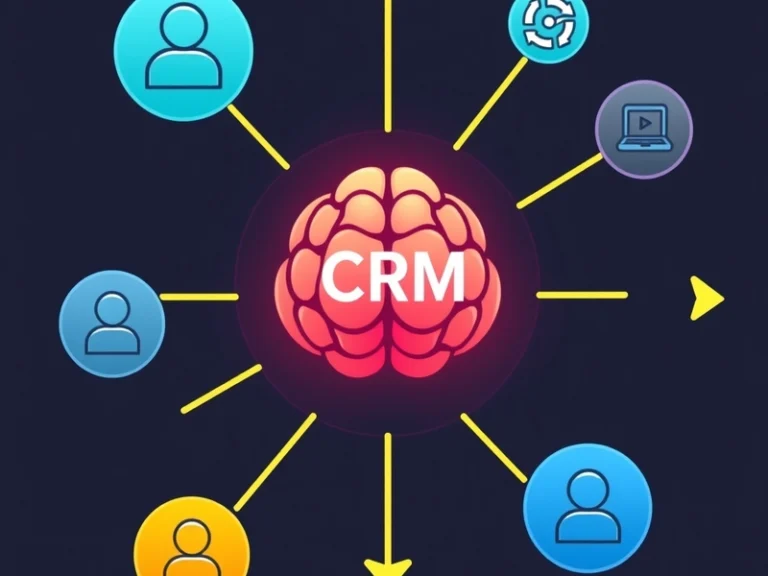
Artificial intelligence is fundamentally transforming Customer Relationship Management (CRM), moving beyond traditional data management to actively enhance customer engagement and streamline outreach efforts across industries.
The integration of AI into CRM systems marks a significant evolution, shifting from reactive data recording to proactive, predictive interaction. Modern CRM platforms are increasingly leveraging AI to process vast amounts of customer data, identify patterns, and automate tasks that were once manual and time-consuming. This shift enables businesses to cultivate deeper, more personalized relationships with their clientele while simultaneously boosting operational efficiency.
The Pillars of AI in Modern CRM
AI’s impact on CRM can be categorized into several core functionalities, each contributing to a more intelligent and responsive customer interaction ecosystem:
- Predictive Analytics: Machine learning algorithms analyze historical customer data, including past purchases, browsing behavior, and support interactions, to forecast future actions. This allows businesses to predict customer churn risk, identify upselling and cross-selling opportunities, and anticipate product or service needs before a customer explicitly states them.
- Hyper-Personalization: AI engines enable CRMs to deliver highly tailored content, product recommendations, and communication strategies. By understanding individual customer preferences and behaviors at scale, businesses can craft bespoke experiences that resonate more deeply than generic outreach. This extends to dynamic website content, personalized email campaigns, and customized product assortments.
- Intelligent Automation: Many routine CRM tasks are now automated by AI. This includes lead scoring and qualification, data entry, scheduling appointments, and even generating initial drafts of customer communications. Automation frees up sales and service teams from repetitive work, allowing them to focus on complex problem-solving and strategic relationship building.
- Natural Language Processing (NLP) and Sentiment Analysis: AI-powered NLP tools parse and understand unstructured text and speech data from customer interactions across various channels—emails, chat logs, social media, and call transcripts. Sentiment analysis, a subset of NLP, goes further by identifying the emotional tone of these interactions, helping businesses gauge customer satisfaction, detect frustration, and prioritize urgent issues.
Practical Applications: AI Tools in Action
These foundational AI capabilities manifest in a range of practical tools and features within contemporary CRM systems, directly impacting how businesses engage with customers:
AI-Powered Chatbots and Virtual Assistants
Customer service has seen one of the most visible transformations. Sophisticated chatbots and virtual assistants, powered by advanced NLP and machine learning, can handle a significant volume of customer inquiries around the clock. They can answer FAQs, provide product information, troubleshoot common issues, and even guide customers through purchasing processes. When an issue requires human intervention, these AI agents can intelligently route the customer to the most appropriate live agent, often providing the agent with a summary of the conversation history and relevant customer data.
Predictive Lead Scoring and Sales Optimization
For sales teams, AI is a game-changer in lead management. Predictive lead scoring models evaluate potential customers based on a multitude of data points—demographics, engagement history, company size, industry—to assign a score indicating their likelihood to convert. This allows sales representatives to prioritize their efforts, focusing on the hottest leads and maximizing their conversion rates. Furthermore, AI can recommend the “next best action” for sales reps, suggesting optimal communication channels, messaging, and timing based on predictive insights.
Personalized Marketing and Outreach
AI elevates marketing automation by moving beyond simple rule-based triggers. It can dynamically segment audiences, determine the optimal time to send marketing messages, and personalize content at an individual level. For instance, an AI module might detect that a customer has repeatedly viewed a specific product category and then automatically trigger a personalized email offering related items or a discount, all without manual intervention from a marketing team member.
Augmented Customer Service for Human Agents
Even when human agents are involved, AI plays a crucial supporting role. AI tools can provide real-time assistance to agents by suggesting relevant knowledge base articles, summarizing customer histories, or even drafting responses during live chats. This augmentation reduces resolution times, improves consistency in service, and allows agents to handle more complex or sensitive customer issues with greater efficiency and empathy.
Sentiment Analysis for Proactive Engagement
Beyond immediate customer service, AI’s sentiment analysis capabilities allow businesses to monitor broader customer feedback across social media, review sites, and public forums. By identifying trends in customer sentiment, companies can proactively address product issues, refine marketing messages, and even identify emerging market opportunities or competitive threats. This provides a constant, real-time pulse on customer perception that was previously difficult to obtain at scale.
The integration of AI into CRM is not merely an incremental upgrade; it represents a fundamental shift in how businesses understand, interact with, and serve their customers. By automating routine tasks, providing deep predictive insights, and enabling hyper-personalization, AI-powered CRM systems are empowering companies to build stronger relationships, drive greater efficiency, and ultimately foster long-term customer loyalty in an increasingly competitive landscape.