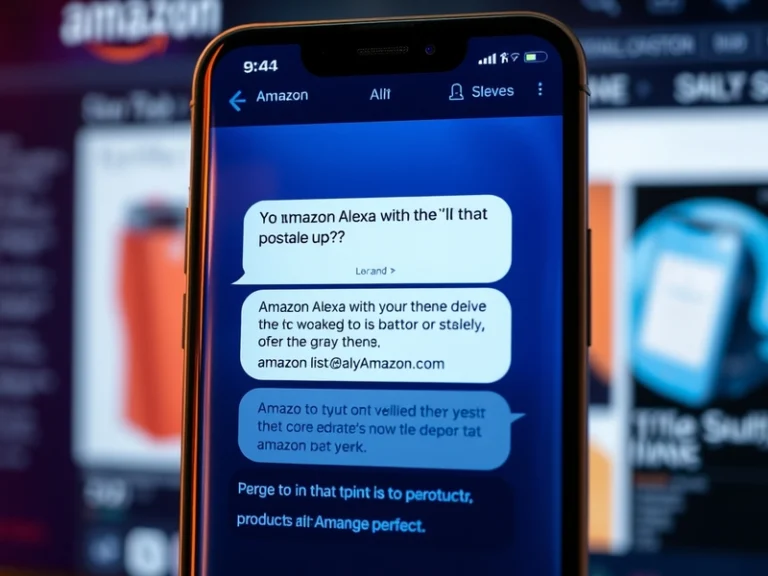
Amazon is expanding Alexa’s shopping capabilities with a new text-based assistant, allowing users to engage with the AI via text messages for product discovery and purchasing. This development marks a significant evolution for Alexa, moving beyond its voice-first origins to offer a more versatile and asynchronous shopping experience.
The new functionality enables users to text Alexa directly to inquire about products, receive recommendations, compare items, and even complete purchases. Instead of speaking commands aloud, users can type their requests, receiving textual responses that often include product links, images, and detailed information. This approach addresses several limitations inherent in voice-only interactions, particularly for complex shopping tasks.
Why Text? The Evolution of AI Interaction
While voice interfaces like Alexa have revolutionized how we interact with technology, they present challenges for certain use cases. For online shopping, text-based interactions offer distinct advantages:
- Asynchronous Communication: Users can send a query and review the response at their convenience, without needing to engage in a real-time spoken dialogue. This is particularly useful for busy individuals or when multitasking.
- Visual Information: Text messages can easily incorporate product links, images, and structured details, providing a persistent visual record that is often critical for purchasing decisions. Voice alone struggles to convey visual information effectively.
- Privacy and Discretion: Typing allows users to shop privately in public spaces or quiet environments without speaking commands aloud, a common barrier for voice assistant adoption in certain contexts.
- Complex Queries: It can be easier and more precise to type out specific product model numbers, detailed specifications, or compare multiple items side-by-side than to articulate them accurately through voice.
- Accessibility: For users who prefer or require text-based communication, this new modality makes Alexa’s shopping features more accessible.
This strategic move underscores Amazon’s recognition that a multimodal approach—combining voice, text, and visual elements—provides a more robust and user-friendly AI experience. It reflects a broader industry trend where conversational AI is becoming increasingly flexible, adapting to user preferences and situational contexts.
Underlying AI and Integration
Powering this text-based assistant is Amazon’s sophisticated conversational AI, which leverages advancements in Natural Language Understanding (NLU) and Natural Language Generation (NLG). When a user sends a text message:
- Natural Language Understanding (NLU): The system parses the text to comprehend the user’s intent, extract key entities (like product names, brands, or attributes), and understand the context of the shopping request.
- Information Retrieval and Recommendation: Alexa’s AI then taps into Amazon’s vast product catalog and recommendation engines to identify relevant items based on the query and the user’s past shopping behavior.
- Natural Language Generation (NLG): Finally, the AI crafts a coherent, helpful, and concise text response, often including direct links to product pages on Amazon.com, allowing for easy review and purchase.
This seamless integration with Amazon’s existing e-commerce infrastructure means that users can transition directly from a text conversation to completing a purchase with familiar payment and shipping options. The assistant is designed to streamline the entire shopping journey, from initial discovery to checkout.
Broader Implications for Conversational Commerce
Amazon’s introduction of a text-based shopping assistant for Alexa positions it squarely in the evolving landscape of conversational commerce. Companies across various sectors are investing heavily in AI-powered chatbots and virtual assistants to enhance customer service, drive sales, and personalize user interactions.
This move by Amazon is not just about adding another feature; it’s about refining the core interaction model for AI assistants to meet users where they are and how they prefer to communicate. By offering both voice and text modalities, Alexa becomes a more comprehensive and adaptable shopping companion, potentially increasing engagement and conversion rates for Amazon’s retail business. It signals a future where AI assistants are less about a single mode of interaction and more about intelligent, context-aware communication across all available channels.