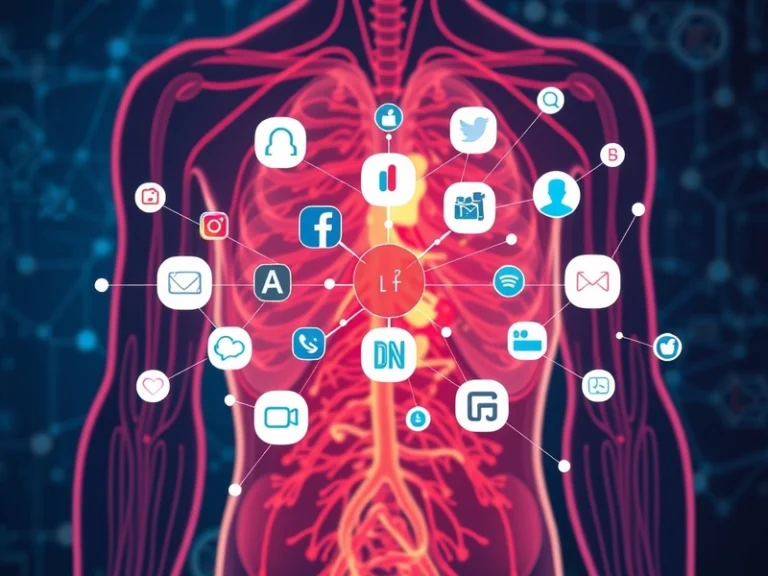
Artificial intelligence systems are demonstrating a significant capacity to analyze vast quantities of social media data, uncovering unreported health symptoms and offering new avenues for public health surveillance and understanding disease patterns.
This emerging application of AI leverages the sheer volume and unsolicited nature of user-generated content across various online platforms. Unlike traditional health monitoring, which relies on clinical visits, surveys, or structured reporting, social media offers a real-time, unfiltered stream of personal experiences and observations. Individuals often share details about their health, feelings, and daily struggles online, inadvertently creating a rich dataset that, when aggregated and analyzed, can reveal broader health trends and individual symptom clusters that might otherwise go unnoticed.
The Mechanism: NLP and Machine Learning
At the core of this capability lies advanced natural language processing (NLP) and machine learning. NLP algorithms are trained to parse human language, extracting meaningful information from unstructured text. For health symptom identification, this involves several key steps:
- Text Preprocessing: Cleaning and normalizing social media posts, removing irrelevant content, slang, and emojis to prepare the data for analysis.
- Symptom Extraction: Identifying specific mentions of symptoms, conditions, or health-related complaints. This goes beyond simple keyword matching, using contextual understanding to differentiate between a genuine symptom report (“I’ve had a persistent headache for days”) and a casual phrase (“This problem is a headache”).
- Contextual Analysis: Understanding the sentiment, severity, and duration associated with reported symptoms. AI models can learn to recognize nuances, such as distinguishing between acute and chronic issues, or identifying potential side effects of medications based on user descriptions.
- Pattern Recognition: Machine learning models then analyze these extracted symptoms across millions of posts to identify patterns. This could include sudden spikes in specific symptom mentions in a particular geographic area, correlations between multiple seemingly unrelated symptoms, or the emergence of new symptom profiles associated with known or novel health conditions.
The ability of these systems to process and interpret human language at scale is critical. They are designed to learn from vast datasets, continually refining their understanding of how people express health concerns in informal online settings.
Uncovering Overlooked Health Signals
The potential applications of this AI capability are far-reaching:
- Early Disease Outbreak Detection: By monitoring increases in symptom mentions (e.g., cough, fever, fatigue) in specific regions, AI could provide early warnings of infectious disease outbreaks, potentially weeks before traditional clinical reporting systems. This was particularly highlighted during recent global health crises.
- Pharmacovigilance and Adverse Drug Reaction Monitoring: Patients often discuss medication side effects online that might not be immediately reported to healthcare providers or captured during clinical trials. AI can sift through these discussions to identify previously unrecognized or underreported adverse reactions to drugs, contributing to post-market surveillance.
- Chronic Disease Management and Understanding: For individuals living with chronic conditions, social media can be a space to share daily struggles, symptom fluctuations, and the impact of their condition on quality of life. AI can aggregate these insights to provide a more holistic understanding of disease progression and patient experience.
- Identifying Health Disparities: Analysis of symptom reporting across different demographic groups or geographic locations could highlight areas with unmet health needs or disparities in access to care, informing public health interventions.
Challenges and Ethical Considerations
While the promise is significant, the deployment of AI for social media health surveillance comes with substantial challenges and ethical considerations:
- Data Privacy and Anonymization: The fundamental concern is how to protect user privacy when analyzing publicly available, but often personally identifiable, data. Robust anonymization techniques are crucial, ensuring that individual users cannot be re-identified from the aggregated data.
- Bias and Representation: Social media users are not a perfectly representative sample of the general population. Data from these platforms can contain inherent biases related to demographics, socioeconomic status, and digital literacy, which could lead to skewed or inaccurate health insights if not properly accounted for.
- Noise and Misinformation: Social media is rife with irrelevant content, sarcasm, misspellings, and outright misinformation. AI systems must be sophisticated enough to filter out this noise and distinguish genuine health reporting from rumor or non-serious mentions.
- Clinical Validation: AI-identified symptom patterns are not diagnostic tools. They generate signals and hypotheses that require rigorous clinical validation and epidemiological investigation by human experts. The correlations identified by AI do not necessarily imply causation.
- Ethical Guidelines and Governance: As this technology evolves, clear ethical guidelines and regulatory frameworks are needed to govern how social media data is collected, analyzed, and used for public health purposes, ensuring transparency and accountability.
The ability of AI to glean health insights from the vast and dynamic landscape of social media represents a powerful, complementary tool for public health and medical research. It offers a new lens through which to observe and understand human health, provided it is developed and deployed with careful consideration for privacy, accuracy, and ethical implications.