OpenAI Faces Supply Chain Attack: An Analysis of the Recent TanStack npm Supply Chain Attack and Its Implications for Cybersecurity in AI
The recent TanStack npm supply chain attack has raised significant concerns in the cybersecurity landscape, particularly for organizations heavily reliant on AI technologies. As artificial intelligence continues to integrate into various sectors, the security of the software supply chain becomes increasingly paramount. This article explores the details of the TanStack attack, its implications for cybersecurity in AI, and offers practical insights for mitigating similar threats in the future.
Understanding the TanStack Attack
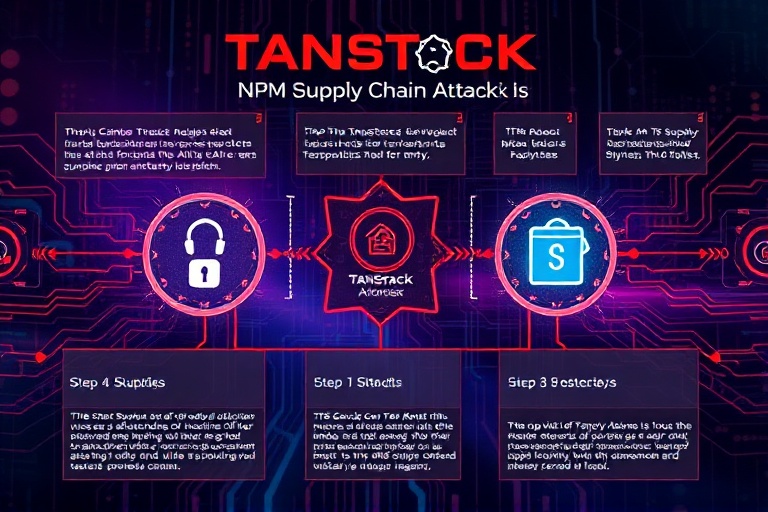
In a supply chain attack, a malicious actor targets the software supply chain to compromise the security of an application indirectly. The TanStack attack, which involved the npm (Node Package Manager) ecosystem, illustrates how vulnerable third-party libraries can lead to significant breaches.
- What Happened: The TanStack attack involved the injection of malicious code into widely used npm packages that developers relied upon. This malicious code was designed to exploit vulnerabilities in the applications that included these packages.
- Impact: With many developers using TanStack packages, the reach of the attack was extensive, affecting numerous applications and potentially leading to data breaches.
- Detection: The attack was discovered when anomalies in traffic patterns were identified, prompting further investigation that revealed the malicious code.
Implications for Cybersecurity in AI
The implications of the TanStack attack resonate deeply within the AI community. As AI systems increasingly depend on third-party libraries and frameworks, the potential for similar attacks grows. The following points encapsulate the key cybersecurity concerns:
- Vulnerability of AI Systems: AI models often leverage external libraries for data processing, model training, and deployment. If these libraries are compromised, the integrity of the AI systems that rely on them can also be jeopardized.
- Trust in Automation: Organizations may lose trust in automated systems if they become aware that such tools can be compromised through their supply chains.
- Regulatory Scrutiny: As more AI systems are deployed, regulators may impose stricter requirements regarding supply chain security and risk management, placing additional burdens on AI developers.
Practical Insights for Mitigating Risks
In the wake of the TanStack attack, organizations must take proactive measures to secure their software supply chains, particularly when developing AI technologies. Here are some practical insights:
- Continuous Dependency Monitoring: Implement tools that monitor dependencies in real-time to identify unusual behavior, such as unexpected network requests or file modifications.
- Use of Automated Scanning Tools: Leverage automated security scanning tools to identify vulnerabilities in third-party libraries before integrating them into your projects.
- Code Reviews: Establish a culture of rigorous code reviews, especially for code that interacts with external libraries to ensure that no malicious code is introduced.
- Limiting Dependencies: Reduce the number of external libraries and frameworks your projects rely on. This minimizes the attack surface and simplifies dependency management.
- Educate Teams: Conduct regular training sessions for development teams about supply chain security and the latest attack vectors. Awareness is critical in preventing future breaches.
Future Possibilities in Supply Chain Security
As AI technology becomes more sophisticated, the future of supply chain security will likely evolve in several ways:
- Enhanced Automation: The integration of AI in cybersecurity will lead to more advanced automated systems that can detect and respond to supply chain attacks in real-time.
- Blockchain Technology: The application of blockchain for software supply chain security is gaining traction. It can provide immutable records of software provenance and ensure the integrity of code.
- Collaborative Security Frameworks: Industry-wide initiatives may emerge to share threat intelligence and best practices, fostering a collaborative approach to securing the software supply chain.
In conclusion, the TanStack npm supply chain attack serves as a stark reminder of the vulnerabilities present in our software ecosystems. As the reliance on AI continues to grow, prioritizing supply chain security is essential for safeguarding the integrity of these advanced technologies. Organizations must implement robust security measures, stay vigilant, and adapt to the evolving landscape of cybersecurity threats.