The Role of Ancient Philosophy in Modern AI
As artificial intelligence (AI) continues to advance at a staggering pace, many scholars and professionals are beginning to examine the philosophical underpinnings of this technology. Interestingly, the roots of contemporary concerns surrounding AI can be traced back to ancient Greek thought. By exploring the intersection between ancient philosophy and modern AI, we can gain valuable insights into the ethics, functionality, and implications of current technologies.
1. The Philosophical Foundations
Ancient Greek philosophers such as Plato, Aristotle, and Socrates laid the groundwork for many of the ethical and epistemological questions we grapple with today in the context of AI. Their inquiries into the nature of knowledge, consciousness, and morality resonate profoundly in the realm of artificial intelligence.
- Plato’s Allegory of the Cave: This allegory suggests that what we perceive is merely a shadow of the true reality. In the AI context, this raises questions about how machines interpret data and whether their “understandings” can ever equate to human comprehension.
- Aristotle’s Ethics: Aristotle emphasized the importance of virtue and moral character. As AI systems begin to make decisions that impact lives, the question becomes: can machines embody ethical principles similar to humans?
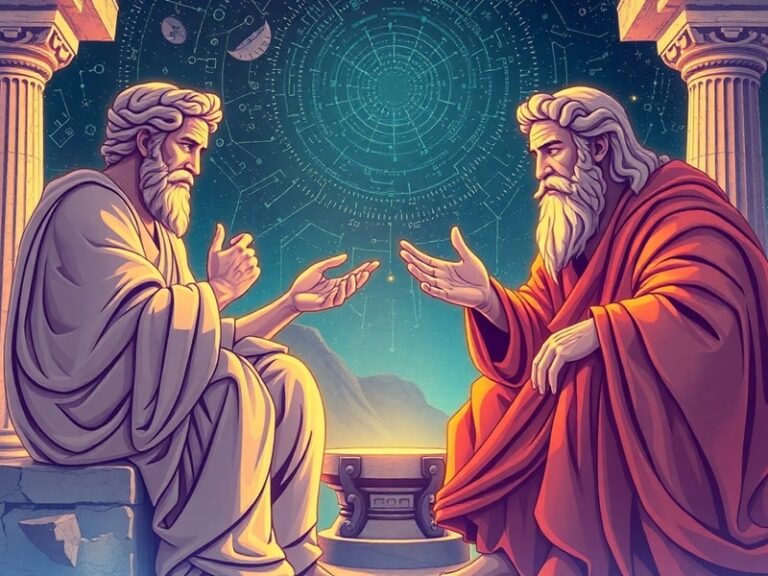
- Socratic Method: Socrates advocated for critical thinking and dialogue. This approach is essential in developing AI systems that are transparent and accountable, promoting an ongoing discourse about their capabilities and limitations.
2. Current Implications in AI Development
The philosophical inquiries from ancient Greece are not just academic exercises; they have practical implications for the AI industry today. As AI systems are deployed across various sectors, including healthcare, finance, and transportation, the ethical considerations become increasingly pressing.
- Ethical AI: The demand for ethical AI frameworks is growing. Companies are tasked with ensuring that their technologies do not perpetuate biases or harm vulnerable populations. This echoes Aristotle’s emphasis on virtue—AI should promote societal good.
- Transparency and Accountability: Drawing from Socratic principles, there is a strong call for transparency in AI algorithms. Understanding how decisions are made is crucial for trust and accountability, especially in high-stakes environments.
- Human Oversight: As Plato suggested, relying solely on perceived reality can lead to flawed outcomes. Thus, human oversight remains vital in AI systems to mitigate risks associated with autonomous decision-making.
3. Future Possibilities
Looking forward, the integration of ancient philosophical concepts in AI development can yield innovative solutions and frameworks that ensure technology benefits humanity. Here are a few possibilities:
- Interdisciplinary Collaboration: The future of AI development may require collaboration between technologists and philosophers to create systems that are not only efficient but also ethically sound.
- Enhanced Human-Machine Interaction: By understanding the philosophical implications of knowledge and consciousness, developers can create AI systems that better understand human emotions and intentions, leading to more intuitive interfaces.
- Societal Impact Assessments: Just as philosophers questioned the implications of their ideas, AI developers might conduct comprehensive assessments before deploying new technologies, ensuring they align with societal values and ethics.
4. Conclusion
As we stand on the precipice of a new era defined by AI, revisiting the insights of ancient philosophy offers a valuable lens through which to examine our technological advancements. The questions posed by Plato, Aristotle, and Socrates are not merely historical; they are crucial to shaping the future of AI. By incorporating these timeless ideas into our modern frameworks, we can better navigate the complexities of artificial intelligence, ultimately fostering a future where technology and humanity coexist harmoniously.